

Beauty, Tips & Advice
Ear Piercing Aftercare: What to Tell Clients and Which Products to Recommend
Ear piercing aftercare should be simple, consistent and clearly explained before a client leaves the salon. Clients need to know how to clean their piercing, which products are suitable, what to avoid and when to seek medical advice.
For salons offering ear piercing services, providing written aftercare instructions alongside verbal guidance helps clients follow the correct routine at home.
What Aftercare Advice Should Salons Give Clients?
A new piercing is a healing wound. Keeping it clean without unnecessary handling or irritation is the main priority.
Salon professionals should explain these five steps:
-
Wash hands first. Clients should never touch a fresh piercing with unwashed hands.
-
Clean gently. Use sterile 0.9% sodium chloride saline labelled for wound washing, ideally once or twice daily, or follow appropriate professional guidance.
-
Leave the jewellery in place. Avoid removing or changing the initial earrings before the piercing is ready.
-
Do not twist the earrings. Rotating jewellery during healing can irritate the piercing channel.
-
Dry carefully. Use clean disposable gauze or paper products rather than shared cloth towels.
Clients should also avoid sleeping directly on a healing piercing and keep hairspray, hair colour, cosmetics and other potentially irritating products away from the area.
Over-cleaning can be just as problematic as neglecting aftercare. More product and more frequent cleaning do not necessarily mean faster healing.
Which Ear Piercing Aftercare Products Should Salons Recommend?
Salons should choose aftercare products based on their ingredients, intended use and compatibility with professional piercing guidance.
-
Sterile Saline Solution
Sterile saline wound wash containing 0.9% sodium chloride without additives is a widely recommended option.
It helps rinse away debris without the need for harsh cleaning agents. Choose a packaged sterile product intended for wound care, rather than contact lens solution or homemade saltwater.
-
Specialised Ear Piercing Solutions
Some piercing brands offer dedicated aftercare lotions and sprays.
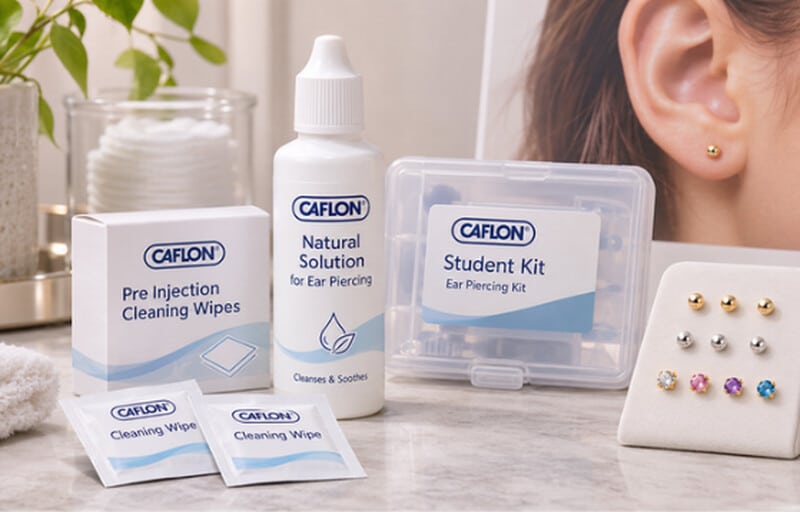
The Hair & Beauty Company lists Caflon Natural Ear Piercing Aftercare Solution in a 30 ml bottle with a dropper applicator. Before recommending it, salons should verify the current ingredient list, as some published formulations contain benzalkonium chloride, which independent professional piercing guidance advises against for routine healing care.
-
Products Clients Should Avoid
Avoid recommending alcohol, hydrogen peroxide, strong antiseptics, essential oils or antibiotic ointments for routine piercing care.
These may irritate the surrounding tissue or interfere with healing. Antiseptic or medicated products should only be used when specifically indicated by an appropriate healthcare professional.
How Long Does an Ear Piercing Take to Heal?
Healing depends on the piercing location, jewellery, individual health and aftercare.
-
Earlobe piercings may begin to settle within six to eight weeks, but complete healing can take longer, often around three months or more. Healing varies between clients, so the absence of discomfort does not mean the piercing is fully healed.
-
Cartilage piercings generally take considerably longer, often several months and sometimes six to twelve months or more.
A piercing that looks healed externally may still be healing internally.
Salons should avoid promising an exact date for changing earrings. Clients should consult their qualified piercer before changing initial jewellery, particularly with cartilage piercings.
What Are the Signs of an Infected Ear Piercing?
Mild tenderness, localised swelling and small amounts of pale crusting can occur during normal healing.
However, clients should seek prompt medical advice if they experience:
-
Increasing pain, swelling or warmth around the piercing.
-
Spreading redness or darkening of the surrounding skin.
-
Yellow, green or white pus.
-
Fever, chills or feeling generally unwell.
Suspected piercing infections require prompt medical assessment, particularly when cartilage is involved or symptoms are worsening. Salon staff should not diagnose infections, recommend antibiotics or advise removing jewellery. Clients should leave jewellery in place unless a healthcare professional instructs otherwise.
How Can Salons Improve Their Piercing Aftercare Service?
A useful aftercare handout should record the piercing date, jewellery type, cleaning instructions, expected healing range and salon contact details.
Explain the instructions before the client leaves, and encourage them to contact the salon for jewellery-related concerns or a healthcare professional for possible infection.
This makes aftercare part of the service rather than an afterthought.
Stock Suitable Ear Piercing Essentials for Your Salon
Providing clear aftercare advice and suitable products helps salons offer a more complete ear piercing service.
The Hair & Beauty Company supplies professional ear piercing products, including Caflon piercing earrings, kits and aftercare solutions.
Browse the range to find products suited to your salon’s piercing services, checking product instructions and suitability before use.
Frequently Asked Questions
-
Can Clients Shower After Getting Their Ears Pierced?
Yes. Gentle showering is generally acceptable. Clients should rinse away shampoo or soap residue and carefully dry the area without rubbing or twisting the jewellery.
-
What Should Clients Do if Their Piercing Jewellery Feels Too Tight?
Clients should contact a qualified piercer if the jewellery feels tight, presses into swollen tissue or appears to be embedding in the skin. They should not force the jewellery or adjust it aggressively at home. If the jewellery is embedding, the skin is severely swollen or infection is suspected, seek prompt medical attention.
-
Can Clients Swim With a New Ear Piercing?
Avoid swimming pools, hot tubs, lakes and seawater while the piercing is healing, as submersion may increase exposure to microorganisms.
