

Tips & Advice
How to Reduce Product Waste in Salons and Increase Profit Margins
Apr
Product waste is one of the easiest salon costs to overlook. A little extra colour left in the bowl, one more pump of shampoo than needed, a treatment applied too generously, or a retail product that expires on the shelf may not seem like a major loss at the time.
But across a busy week, month, or year, those small habits can quietly reduce your profit margins.
For many salon owners in Ireland, the focus is usually on bringing in more clients, improving rebooking rates, increasing retail sales, or adjusting service prices. All of that matters. But sometimes, the quickest way to improve profitability is not by selling more — it is by wasting less.
With supplier costs, energy bills, staffing pressures, and price-conscious clients all affecting the hair and beauty industry, reducing product waste is no longer just a sustainability goal. It is a practical way to run a cleaner, more efficient, and more profitable salon.
The good news is that waste reduction does not mean cutting corners. In fact, the most organised salons often deliver more consistent results because they use clearer systems, better measurements, and smarter stock control.
Here is how your salon can reduce product waste, protect margins, and keep service quality exactly where it should be.
Why Product Waste Is a Silent Profit Killer
Salon waste rarely feels urgent because it happens in small amounts. One overfilled colour bowl does not look like a serious problem. Neither does an extra squeeze of conditioner or a few unused retail products sitting on a shelf.
The issue is repetition.
When the same habits happen across multiple stylists, several clients, and hundreds of appointments, the cost adds up quickly.
Common causes of product waste in salons include:
- Over-mixing hair colour
- Free-pouring shampoo, conditioner, and treatments
- Using more back-bar product than necessary
- Expired colour, peroxide, or styling products
- Overstocking because of bulk buying
- Poor storage that affects product quality
- Too many overlapping products on the back bar
- Retail stock that does not sell quickly enough
A salon spending €2,000 per month on professional products does not need to waste a large percentage for it to affect profit. Even a small amount of avoidable waste can mean hundreds of euro lost over time.
This is why working with reliable professional salon supplies and keeping a more controlled ordering system can make a real difference. The goal is not to use less for the sake of it. The goal is to use the right amount, every time.
The Link Between Waste Reduction and Profit Growth
Reducing product waste is not about being overly strict or making stylists feel watched. It is about giving the salon more control.
When product usage becomes more predictable, everything becomes easier to manage:
- Cost per service becomes clearer
- Pricing decisions become more accurate
- Stock lasts as expected
- Cash flow improves
- Team accountability increases
- Reordering becomes less stressful
This is especially important for services such as colouring, bleaching, toning, treatments, and smoothing services, where product costs can vary depending on hair length, density, and technique.
If a salon does not know roughly how much product is being used per service, it becomes difficult to know whether that service is truly profitable.
Waste reduction helps you protect margin without immediately increasing prices. In a competitive market, that can be a major advantage.
Standardise Product Usage Without Limiting Creativity
One of the biggest concerns salon teams have is that standardising product usage will limit creativity. But structure does not remove artistry. It simply creates a reliable starting point.
Every stylist still needs professional judgement. Hair length, porosity, texture, previous colour history, and desired result all matter. But when product mixing is based only on habit or guesswork, waste becomes much harder to control.
For example, two stylists may prepare very different amounts of colour for the same type of root application. One may mix carefully in stages, while another may prepare too much at the start “just in case”.
Simple systems can reduce this without affecting results:
- Agree standard mixing amounts for common services
- Use digital client formula records
- Measure colour and peroxide accurately
- Mix in stages instead of preparing everything at once
- Keep notes on how much product was actually used
- Review common over-mixing patterns during team meetings
Using proper colouring accessories, such as tint bowls, brushes, boards, and measuring tools, also makes it easier to keep product usage consistent. THBC lists colouring accessories including bowls, brushes, and boards for salon use.
Creativity thrives when the basics are organised. Waste thrives when there is no system.
Train Your Team to Understand Product Costs
Most stylists are trained to focus on technique, finish, client care, and results. That is exactly as it should be. But many have never been shown how product use affects salon profitability.
A colour bowl that costs a few euro in product may not seem significant. But if that same amount is wasted several times a day, across several team members, the yearly cost becomes much harder to ignore.
The key is to build awareness without creating fear.
You can do this by:
- Sharing approximate product costs per service
- Explaining how waste affects profit margins
- Showing how better efficiency supports wages, training, bonuses, or business growth
- Encouraging staged mixing instead of over-preparing
- Praising good stock habits, not just sales or speed
Avoid making the conversation feel negative. This is not about blaming stylists. It is about helping the whole team understand the business side of the craft.
When people understand the impact, behaviour usually changes naturally.
Streamline Your Back-Bar Products
Product overload is another common cause of salon waste.
Many salons build up a back bar full of products that do similar jobs. There may be multiple shampoos, conditioners, masks, styling creams, sprays, and treatments with overlapping purposes. Over time, this can create confusion for staff and slow down stock movement.
The result is often:
- Products being forgotten
- Older stock being pushed to the back
- Staff using different products inconsistently
- More expiry risk
- More money tied up in slow-moving stock
A streamlined back bar is easier to manage and easier to train around.
Consider reviewing your back bar every quarter and asking:
- Which products are used every day?
- Which products rarely move?
- Are there duplicates across brands?
- Do we have too many options for the same result?
- Are staff clear on when and how to use each product?
Choosing professional products with clear functions can help reduce waste and confusion. For example, THBC offers a wide range of professional hair care and styling products from brands including Lisap, Schwarzkopf, Revlon, L’Oréal, Wella, Kadus, and milk_shake.
Fewer, better-chosen products can often produce better salon systems.
Improve Salon Stock Control
Overstocking can feel safe, especially when you are worried about running out of essential products. But too much stock can quickly become a problem.
Expired colour tubes, old peroxide, slow-moving retail, dried-out styling products, or damaged stock all represent money that has already left the business but will never return as profit.
Good stock control does not have to be complicated. Even a simple spreadsheet or stock sheet can make a noticeable difference.
Start with these basics:
- Set minimum and maximum stock levels
- Use FIFO: First In, First Out
- Check expiry dates regularly
- Keep colour and peroxide stored correctly
- Avoid bulk buying unless your usage data supports it
- Review slow-moving stock every month
- Keep ordering responsibility clear
For busy salons, it can also help to separate professional service stock from retail stock. This makes it easier to see what is being used by the team and what is being sold to clients.
The goal is not to have more stock. The goal is to have the right stock, in the right quantity, at the right time.
Reduce Retail Waste With a Smarter Product Strategy
Retail waste is often overlooked because it does not go down the sink like colour or shampoo. But unsold retail still affects profit.
Every product sitting on the shelf is money tied up in stock. If it does not sell before it becomes outdated, damaged, or irrelevant, it becomes a loss.
A stronger retail strategy can reduce this.
Instead of trying to stock everything, focus on a smaller number of products that connect directly to your services.
For example:
- Colour-safe shampoo and conditioner after colour services
- Blonde care products after toning or bleaching
- Repair treatments after lightening
- Heat protection after styling services
- Curl care after curl-focused appointments
- Scalp care after scalp-focused consultations
This makes retail feel more natural for the client because the recommendation is connected to the service they have just received.
Rather than saying, “Would you like to buy a shampoo today?” the stylist can say:
“Because we refreshed your colour today, I’d recommend using a colour-care shampoo at home. It will help protect the result and keep the tone looking fresher between appointments.”
That feels helpful, not pushy.
Retail works best when it is part of the client experience, not an afterthought at reception.
Use Practical Salon Tools to Control Waste
Sometimes the best waste-reduction changes are very simple.
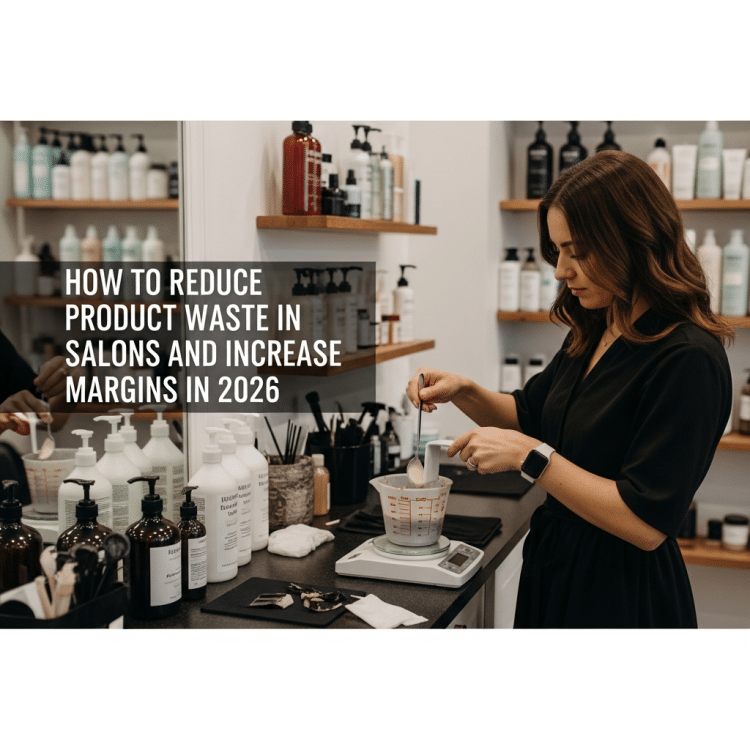
The right tools can help staff measure, dispense, store, and use products more accurately. This improves consistency and reduces overuse without slowing anyone down.
Useful tools include:
- Tint bowls with measurement guides
- Digital scales
- Tint brushes
- Pump dispensers
- Spray bottles
- Labelled refillable containers
- Salon timers
- Clear storage trays
- Gloves, towels, and protective salon essentials
THBC’s salon accessories category includes practical items such as hair colour mixing bowls, colour brushes, water spray bottles, and timers.
The Lisap Tint Bowl is a good example of a simple salon tool that supports better product control, as it includes a measurement scale.
These small details matter. A well-organised salon also gives clients a better impression. When products are measured, labelled, and stored properly, the space feels more professional and considered.
Reduce Water and Energy Waste Too
Product waste is often connected to water and energy waste.
For example, if too much shampoo is applied, it may take longer to rinse. If a treatment is over-applied, rinse time increases again. If hot tools are left switched on between clients, energy costs rise without adding value.
These may seem like separate issues, but they all affect operating costs.
Simple improvements include:
- Fully saturating hair before shampooing
- Using the correct amount of shampoo or treatment
- Turning off hot tools when not needed
- Checking water temperature and flow
- Avoiding unnecessary repeat rinsing
- Training staff on efficient backwash habits
Reducing water and energy waste supports both profit and sustainability. It also helps the salon feel more modern, responsible, and professionally managed.
Track Waste Like You Track Revenue
Most salons track revenue. Many track bookings, rebooking rates, retail sales, and staff performance. But far fewer track product waste.
That is a missed opportunity.
You do not need a complex system. Start with a few simple monthly checks:
- Product spend compared with service revenue
- Colour usage per appointment type
- Retail sell-through rate
- Value of expired stock
- Slow-moving products
- Most frequently reordered items
- Services that seem to use more product than expected
Over time, patterns become clear.
You may find that one service is priced too low for the amount of product used. You may notice that one product is constantly overused. You may realise that some retail lines do not suit your client base.
Data removes guesswork. It helps you make better decisions without relying only on instinct.
Sustainability Matters to Modern Salon Clients
Clients are becoming more aware of how businesses operate. They notice when salons are organised, thoughtful, and responsible.
Sustainability does not have to mean making big claims or changing everything overnight. It can be shown through practical everyday choices:
- Reducing unnecessary product waste
- Ordering stock more carefully
- Choosing quality professional products
- Using refillable containers where suitable
- Avoiding overstocking
- Keeping the salon clean and organised
- Recommending products with purpose
For many clients, these details build trust. They show that the salon cares about quality, cost, and responsibility.
In 2026, professionalism and sustainability are closely connected. A salon that manages its resources well often feels more premium, more reliable, and more client-focused.
How Waste Reduction Improves the Client Experience
There is a common myth that reducing waste means reducing quality. In reality, the opposite is often true.
When product systems improve, the client experience usually improves too.
Better systems can lead to:
- More consistent colour results
- More accurate product recommendations
- A calmer salon environment
- Smoother appointment timing
- Better stock availability
- Less clutter around workstations
- A more professional impression
Clients may not notice the measuring bowl or stock sheet. But they do notice when their colour is consistent, their stylist feels prepared, and the salon runs smoothly.
Efficiency creates confidence. And confidence improves the client experience.
Small Systems Create Stronger Margins
Reducing product waste does not require a dramatic overhaul. It starts with small, consistent systems.
When salons standardise product usage, educate their teams, simplify their back bar, manage stock carefully, and align retail with services, they can protect profit without compromising quality.
The best part is that waste reduction improves more than one area of the business. It supports:
- Profitability
- Sustainability
- Team accountability
- Stock control
- Service consistency
- Client trust
In a year where costs continue to rise, salons need practical ways to protect their margins. Reducing product waste is one of the simplest places to start.
If you are reviewing your salon stock, back-bar products, or everyday essentials, explore The Hair & Beauty Company’s range of professional hair products, salon essentials, and salon accessories to help keep your salon organised, efficient, and ready for every client.
FAQs: Reducing Product Waste in Salons
1. What causes the most product waste in salons?
The most common causes are over-mixing colour, using too much shampoo or treatment, poor stock rotation, expired products, and carrying too many similar products on the back bar.
2. Will reducing product usage affect salon results?
Not when it is done properly. Measuring products more accurately can actually improve consistency because stylists are using the right amount for each service instead of relying on guesswork.
3. How can a small salon reduce waste without expensive software?
Start with simple systems such as measuring bowls, stock sheets, FIFO rotation, monthly stock checks, and staged colour mixing. Even a basic spreadsheet can help reduce unnecessary loss.
4. How often should salons check stock?
Most salons should review professional stock weekly and retail stock monthly. Busy salons may need to check key items more often, especially colour, peroxide, shampoo, treatments, gloves, and towels.
5. Why is back-bar organisation important?
A clear back bar helps staff choose the right product quickly, reduces duplication, prevents forgotten stock, and makes training easier. It also creates a more professional salon environment.
6. Can reducing waste help increase salon profit margins?
Yes. When less product is wasted, more of the revenue from each service becomes profit. This can help improve margins without immediately increasing service prices.
7. Does sustainability matter to salon clients?
Yes, many clients appreciate salons that use products responsibly and avoid unnecessary waste. It can improve the salon’s image while also supporting better business efficiency.
