

Hairdresser, Tips & Advice, Training Academy
Which Mannequin Head Is Right for Practice? A Guide for Hairdressing Students and Trainers
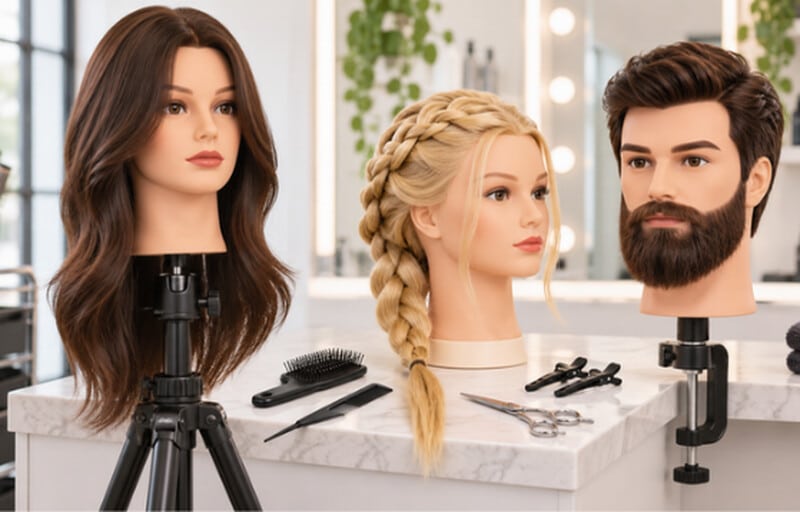
The right mannequin head for hairdressing practice depends on the technique being taught. Human hair heads are generally better for cutting, colouring and heat styling, while synthetic heads are a practical choice for sectioning, braiding and basic styling exercises.
For hairdressing students, trainers and salon owners managing apprentices, choosing the correct hair type and length helps make practice sessions more useful and avoids unnecessary replacement costs.
Human Hair vs Synthetic Mannequin Heads: What’s the Difference?
Both types have a place in hairdressing education, but they behave differently.
Human Hair Mannequin Heads
Human hair training heads provide a more realistic experience when practising techniques that depend on the hair’s movement, texture and response to styling.
They’re particularly useful for:
-
Precision cutting and graduation
-
Blow-drying and brush control
-
Curling and straightening
-
Colour application and highlighting
-
Advanced styling techniques
However, not every human hair head is suitable for chemical services. Some have been previously processed, which can affect colouring and lightening results. Check the manufacturer’s instructions before beginning.
Synthetic Hair Mannequin Heads
Synthetic heads are generally more affordable and work well for repeated mechanical exercises.
They’re useful for practising sectioning, plaiting, partings, hand positioning and basic upstyles.
The main limitation is heat and chemical compatibility. Standard synthetic fibres can melt or become permanently damaged when exposed to high temperatures. Unless the manufacturer specifically confirms suitability, avoid heated styling tools, bleach and permanent colour.
For trainers teaching basic techniques to larger groups, synthetic heads can be a cost-effective starting point.
Which Hair Length Should You Choose for Practice?
Hair length determines which techniques students can perform and how many cutting exercises a head can accommodate.
-
12–14 inches: Suitable for foundational cutting, layering, sectioning and selected upstyling exercises, depending on the hair density and technique.
-
16–18 inches: A versatile option for foundational cutting, blow-drying and styling techniques.
-
20–22 inches: Better suited to longer layers, braiding, upstyles and practising techniques that require more working length.
Longer hair offers greater flexibility, but it isn’t automatically better.
For example, a student practising a short graduated bob doesn’t need the same length as someone learning bridal upstyles.
Remember that once a mannequin’s hair is cut, it cannot grow back. Trainers should plan cutting exercises from longer styles to shorter ones to get more use from each head.
Which Mannequin Head Is Best for Different Training Exercises?
Rather than purchasing one type for every student, match the mannequin head to the training objective.
-
For cutting practice: Choose a human hair head when realistic movement, tension and precision are important.
-
For braiding and sectioning: A long synthetic head may be sufficient, particularly for beginners repeating the same technique.
-
For colouring practice: Select a human hair head specifically approved for chemical processing. Check its previous treatment history and carry out a strand test where appropriate.
-
For barbering: A male mannequin head with suitable short hair or beard coverage allows students to practise clipper control, blending and facial-hair techniques.
-
For upstyling: Prioritise sufficient length, density and secure hair attachment to support repeated pinning and manipulation.
What Should Trainers Check Before Buying?
Hair type and length aren’t the only considerations.
Check the hair density, attachment quality and whether the head fits a suitable table clamp or tripod. A stable mounting system helps students maintain consistent working angles.
For colleges and salons training several apprentices, it also helps to assign each head a specific purpose.
Keep one head for cutting, another for styling and a separate human hair head for colour work. This prevents chemical processing or repeated cutting from making a head unsuitable for other exercises.
How Do You Make a Training Head Last Longer?
A few maintenance habits can extend its useful life:
-
Detangle gently, working from the ends upwards.
-
Follow the manufacturer’s washing and conditioning instructions.
-
Avoid unnecessary pulling around the hairline.
-
Use heat only within the permitted temperature range.
-
Store heads clean, dry and protected from tangling.
For trainers, a simple practice schedule also helps prevent students from cutting away valuable length before completing the intended exercises.
Find the Right Mannequin Head for Your Training Needs
Whether you’re equipping a training salon or preparing students for practical assessments, selecting a mannequin head suited to the technique makes a difference.
The Hair & Beauty Company offers human hair and synthetic mannequin heads, along with training accessories for hairdressing practice.
Browse mannequin heads and training accessories at The Hair & Beauty Company.
Frequently Asked Questions
-
Can You Colour a Synthetic Mannequin Head?
Standard synthetic mannequin heads are generally unsuitable for permanent colouring or bleaching. Use a human hair training head approved for chemical services.
-
Do Hairdressing Students Need a 100% Human Hair Mannequin?
Not for every exercise. Synthetic heads can work well for sectioning and braiding, but human hair is generally preferable when realistic cutting, heat styling or chemical processing is required.
-
Is a Table Clamp or Tripod Better for Practice?
A table clamp is practical for fixed workstations, while an adjustable tripod provides more positioning flexibility. Check compatibility and stability before purchasing.
