

Beauty, Electrical, Tips & Advice
How Professional Facial Steamers Work: Hot Mist vs Ozone and What Your Treatments Need
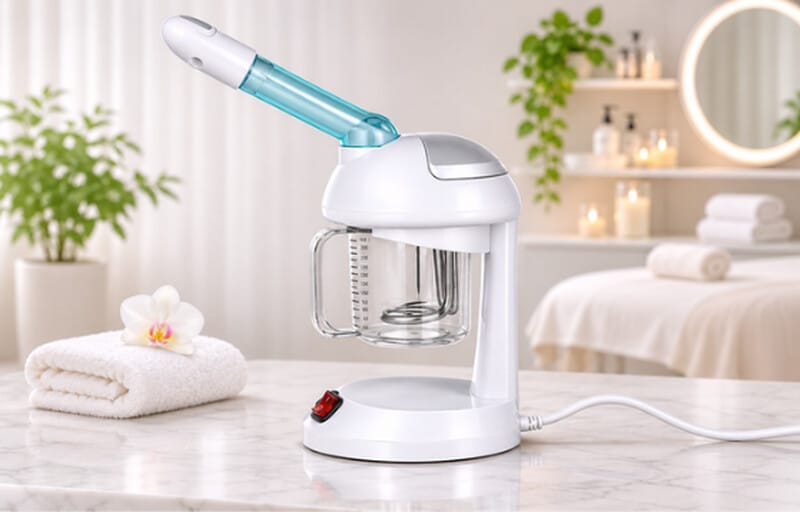
Professional facial steamers use warm water vapour to soften surface debris and prepare the skin for cleansing and certain extraction treatments. Some models include an ozone function, but this does not automatically make them more effective or suitable for every client.
For salon owners, the decision comes down to the treatments offered, client skin conditions, equipment safety and whether additional features serve a practical purpose.
How Does a Professional Facial Steamer Work?
A facial steamer heats water inside a reservoir and directs warm vapour through an adjustable nozzle towards the client’s face.
The warmth and moisture temporarily soften surface skin and help loosen some oily deposits, which can make certain cleansing and extraction procedures easier.
However, steam does not physically open and close pores. Pores do not have muscles that allow them to operate this way.
Professional facial steamers commonly include adjustable arms, water reservoirs and controls for steam output or operating time. Some models also feature automatic shut-off mechanisms when water levels become too low.
These features vary between manufacturers, so operating instructions should always be checked before treatment.
What Is the Difference Between Hot Mist and Ozone Facial Steamers?
Hot Mist Facial Steamers
Hot mist steamers produce warm water vapour without requiring an additional ozone function.
They are primarily used for:
-
Preparing suitable skin for manual extractions.
-
Softening surface debris before cleansing.
-
Adding warmth and moisture during selected facial treatments.
For salons offering standard cleansing facials, hot mist equipment may provide the necessary functionality without additional features.
Steaming should still be optional. Clients with reactive skin may benefit more from a gentler, non-heated preparation method.
Ozone Facial Steamers
An ozone facial steamer, sometimes called a vapozone steamer, combines warm vapour with an ozone-generating function.
In some professional machines, a UV lamp produces ozone within the vapour pathway. The function may be controlled separately from the steaming mechanism.
Ozone is sometimes marketed for its antimicrobial properties. However, this does not establish that ozone facial steaming treats acne, sterilises skin or improves facial treatment outcomes.
Ozone is also a respiratory irritant. Salons should not assume the feature is harmless simply because it is included in professional equipment.
Before considering ozone operation, check the manufacturer’s safety guidance, ventilation requirements and suitability for occupied treatment rooms.
Which Facial Steamer Does Your Salon Actually Need?
The right choice depends on your treatment menu rather than the number of functions advertised.
-
For standard cleansing facials: A reliable hot mist steamer may be sufficient where steaming is appropriate for the client.
-
For extraction-focused treatments: Look for controllable steam delivery, adjustable positioning and straightforward cleaning. The client’s skin condition remains more important than the machine’s additional functions.
-
For salons considering ozone models: A machine with an optional ozone feature does not mean that feature must be used. Prioritise clear operating instructions and documented safety information.
-
For busy treatment rooms: Consider warm-up time, water capacity, ease of cleaning, replacement components and storage space.
A machine that is difficult to maintain can interrupt appointments regardless of its advertised features.
For salons needing a mobile treatment-room setup, the Crewe Orlando Italia Facial Steamer features a wheeled stand, quick heating and automatic shut-off when empty.
When Should Facial Steaming Be Avoided?
Facial steaming is not suitable for every skin type.
Clients with rosacea, visible broken capillaries, significant redness, eczema or highly sensitive skin may experience increased irritation from heat.
Avoid steaming over sunburned or already irritated skin. Assess recent treatments and relevant health conditions before proceeding.
During treatment, follow the manufacturer’s specified nozzle distance and timing. Never direct excessively hot steam towards the skin, and stop immediately if the client experiences discomfort.
For ozone-equipped devices, respiratory sensitivity and asthma require particular caution.
How Do You Maintain a Professional Facial Steamer?
Regular maintenance helps keep steam output consistent and reduces equipment problems.
Salon teams should:
-
Use the water type specified by the manufacturer.
-
Empty and clean the reservoir as instructed.
-
Check the nozzle for deposits or blockages.
-
Inspect electrical components and seals.
-
Allow equipment to cool before cleaning or refilling.
Do not pour essential oils into the water reservoir unless the manufacturer specifically permits it. Models with aromatherapy compartments may have separate instructions.
Frequently Asked Questions
-
Is Ozone Better Than Hot Mist for Facial Treatments?
Not necessarily. Hot mist provides the warming function used in conventional facial steaming. Ozone adds a separate feature, but there is insufficient evidence to recommend ozone exposure as a superior facial treatment.
-
Can Facial Steamers Help With Blackheads?
Warm steam may soften surface oils and make some blackheads easier to extract professionally. It does not remove blackheads automatically or replace appropriate extraction techniques.
-
Can You Use a Facial Steamer on Every Client?
No. Client skin sensitivity, existing conditions and recent treatments determine whether steaming is appropriate. A consultation should come before using heat-based facial equipment.
Choose Professional Facial Equipment for Your Salon
The best facial steamer is one that suits your treatment menu, is straightforward to maintain and allows safe, controlled operation.
The Hair & Beauty Company supplies professional facial steamers and beauty equipment for salons across Ireland.
Browse THBC’s professional facial steamer range and compare equipment features for your treatment room.
