

Uncategorized
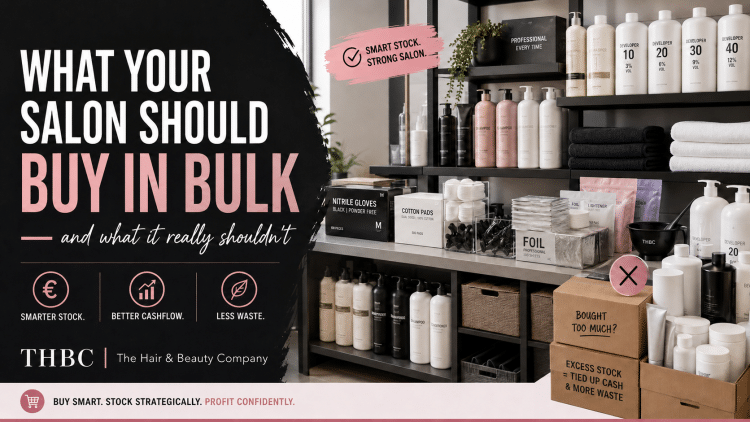
What Your Salon Should Buy in Bulk — and What It Really Shouldn’t
Jun
There is a certain comfort in a full stockroom. Boxes stacked neatly. Fresh towels ready. Gloves in every size. Plenty of foil. Enough developer to get through a busy week without anyone shouting, “We’re out again!” For salon owners, bulk buying can feel like control. And sometimes, it is.
But sometimes that “great deal” is just money sitting on a shelf. The truth is, buying in bulk only works when your salon genuinely gets through the product. If it sits there for months, goes out of trend, takes up space, gathers dust, gets forgotten, or becomes something the team stops using, it was never a saving. It was just dead stock bought with confidence. That is the part many salons learn the hard way.
A salon does not lose money only when a product is thrown away. It loses money when cash is tied up in stock that is not moving. It loses money when staff open three bottles of the same product. It loses money when you have six shades nobody asks for, but somehow no gloves on a Friday afternoon. So the better question is not:
“Can I get this cheaper if I buy more?”
The better question is:
“Will this product actually move through my salon?”
That is where smart salon buying starts.
At The Hair & Beauty Company, we work with salons, barbers, beauty professionals and nail techs across Ireland who need reliable professional stock. This guide is for salon owners who want to buy with their head, not just fill the shelves and hope for the best.
Bulk Buying Sounds Sensible — Until It Starts Hiding Problems
Every salon has products that disappear fast. Gloves. Foils. Towels. Couch roll. Certain shampoos. Certain developers. The things nobody gets excited about until they run out. Those are usually the products worth buying in larger quantities.
But then there is the other side of the stockroom.
The nail colours that looked amazing when you ordered them but never suited your clients.
The retail range staff never mention at the chair.
The “new treatment” products bought before the team properly launched the service.
The developer strength you bought because it was on offer, but hardly anyone uses.
The seasonal stock that made sense in November and looked very sad by February.
This is where bulk buying becomes a problem. Not because the products are bad. Not because the salon made a stupid decision. Usually, it happens because the order was based on hope instead of usage.
Hope that a trend would take off.
Hope that clients would buy retail.
Hope that a new service would get busy.
Hope that staff would use the product properly.
Hope that buying more would somehow make the salon more organised.
Hope is not a stock system.
A better salon order is built around what actually happens in the business.
The Products Most Salons Can Safely Buy in Bulk
Let’s start with the easier side: the stock that usually makes sense to buy in quantity. Not every salon is the same, but if a product is used every day, by different team members, across different services, and does not depend on trends, it is usually a safer bulk buy.
These are the products that keep the salon moving.
1. Gloves: The Boring Product That Can Ruin a Day
Nobody opens a salon because they love ordering gloves. But run out of them once during a busy colour day and suddenly they become the most important product in the building.
Gloves are usually a smart bulk buy because they are used everywhere: colour work, bleaching, cleaning, waxing, beauty treatments, hygiene routines, and general salon mess. They are not trend-led. They do not depend on client taste. They are not sitting there waiting for someone to fall in love with a shade.
They simply get used. The only mistake is bulk buying the wrong sizes.
Every salon has that one glove size that vanishes first and another that sits untouched. Before ordering a mountain of stock, check what the team actually wears. Buying ten boxes of a size nobody likes is not bulk buying. It is cluttered. A simple fix: write down which sizes disappear fastest over two or three weeks. Then bulk buy based on that, not guesswork.
2. Foils and Meche: Worth Buying Properly If Colour Is Your Bread and Butter
If your salon does regular colour work, foils and meche are not occasional extras. They are part of the rhythm of the week. Highlights, balayage, root work, blonding, colour corrections — they all eat through colour accessories faster than owners sometimes realise. This is where bulk buying can make sense, especially for colour-heavy salons. But there is one warning: do not buy purely on price.
Cheap foil can slow a stylist down. It can tear, slip, fold badly or make application more awkward than it needs to be. That lost time has a cost too, even if it does not show up clearly on the invoice. A busy colour day is not the time to discover that your “great deal” foil is annoying everyone.
If your salon depends on colour services, your foil and meche stock should be reliable, easy to use and always available. Useful internal link: Foil, Meches and Wraps
3. Towels: Buy Enough, But Don’t Buy Cheap Trouble
Towels are one of those products salons often underestimate. You do not notice them when there are enough. You really notice them when there are not.
A salon needs enough towels to survive real working days, not imaginary quiet ones. Think late colour appointments, double-booked wash basins, barber services, treatments, staff grabbing extras, towels held back for laundry, and the Saturday pile that seems to grow by itself. Buying towels in bulk can be smart. But only if they are towels you actually want clients to see.
Poor-quality towels can stain quickly, feel rough after repeated washing, lose absorbency, and make the salon look tired. They may be cheap at the start, but if they need replacing sooner or look bad in front of clients, they are not really saving you money.
A better way to think about towels:
- Have enough for your busiest day, not your average day.
- Keep colour towels separate where possible.
- Buy chlorine-resistant towels for colouring services.
- Replace the ones that make the salon look worn out.
- Don’t buy so many that your storage becomes chaos.
Towels should support the service, not become another thing staff are fighting over.
4. Couch Roll, Cotton Wool and Everyday Beauty Disposables
Beauty rooms, waxing rooms, nail desks and treatment spaces run through disposables quietly.
Couch roll, cotton wool, wipes, spatulas and similar essentials may not feel exciting, but they are often safe bulk buys because they are used repeatedly and predictably. The key word is predictable.
If your beauty services are consistent, bulk buying these products usually helps. If a treatment is only done once in a while, be more careful.
And storage matters more than people think. A box of disposables stored badly, crushed, damp or awkward to access is not efficient. It just becomes a hidden mess. Bulk buying only works when the product is easy to store, easy to find and easy to rotate.
5. Backbar Shampoo and Conditioner: Bulk Buy the System, Not the Chaos
Backbar stock can be a great place to buy in bigger quantities, but only when your salon has a clear system. If your basin area is full of random open bottles, bulk buying will not solve the problem. It may make it worse.
A strong backbar usually has a clear purpose:
- A core shampoo and conditioner range
- A colour-care option
- A repair or strengthening option
- A hydration or smoothing option
- A treatment or mask that links to paid services
That makes sense. What does not make sense is every stylist opening something different because they prefer the smell, the texture, the bottle, or whatever came in the latest order. Backbar products are often overused because no one measures them, no one tracks them, and everyone assumes someone else is watching.
If your salon gets through certain shampoos, conditioners or treatments every week, buying more can be smart. But first, make sure the team is using the same agreed products for the right services.
Useful internal link: Professional Hair Care Products
6. Core Peroxide Developers: Bulk Buy Only What Actually Moves
Peroxide developer is where many salons waste more money than they realise. Some developers move constantly. Others sit there like emergency stock for a service that rarely happens. That is why developer should not be bulk bought blindly.
A busy colour salon may get through certain strengths quickly, especially if several stylists are using the same colour system. In that case, larger sizes or repeat quantities can make sense. But if a strength is only used occasionally, buying too much can lead to half-used bottles, messy shelves and cash tied up in slow-moving stock.
Before ordering more developer, ask:
- Which strength runs out first?
- Which one barely moves?
- Are we carrying too many brands at once?
- Are staff opening new bottles before finishing old ones?
- Are we buying because we use it, or because we feel safer having it?
The right developer stock is not about having everything in large quantities. It is about having enough of the products your team uses most, and controlled amounts of the ones used less often.
Useful internal links:
Peroxide & Developers
Bleach & Peroxide
7. Cleaning and Hygiene Stock: Never Let This Become a Panic Order
Some stock is annoying to run out of. Hygiene stock is more serious.
Cleaning products, sanitising supplies, disinfectants and hygiene disposables support the whole salon. Hair, barbering, nails, waxing, beauty treatments — they all rely on clean, professional working habits. This is usually a sensible repeat-buy category because it is not about trends or preferences. It is about running the business properly. The only caution is safe storage and sensible quantities. Bulk hygiene stock should be easy to access, clearly stored and used in rotation. Nobody wants to discover an old box buried behind furniture after placing another order.
What Your Salon Should Not Automatically Buy in Bulk
Now we get to the part that protects your cashflow. Some products look tempting in bulk because they are pretty, discounted, new, seasonal or “probably useful”. But in salons, “probably useful” can become “still sitting there six months later”. These are the products to treat carefully.
1. Trend-Led Nail Colours
Nail colours are dangerous because they are easy to fall in love with. A shade looks beautiful online. A trend starts popping up everywhere. A supplier launches a seasonal collection. A few clients mention something similar. Suddenly it feels smart to stock up.
But your clients may not behave like Instagram. Some salons have clients who love bold shades. Others have clients who want French, nudes, soft pinks, reds and safe classics most of the year. Some trend colours sell for three weeks and then disappear.
That does not mean salons should ignore trends. It means they should test them.
A better nail stock plan looks like this:
Bulk buy: proven classics your clients ask for again and again.
Buy lightly: trend colours, seasonal shades and unusual finishes.
Avoid overstocking: colours that look good in a collection but do not suit your actual client base.
Your salon does not need every viral shade in depth. It needs the right balance between dependable colours and a few fresh options that keep the service menu current.
2. Retail Products Staff Don’t Talk About
Retail products do not sell themselves just because they are on a shelf. This is one of the biggest stock mistakes salons make.
A salon buys a beautiful retail range. The bottles look great. The display is full. The invoice was painful, but everyone feels optimistic.
Then nothing happens. Clients glance at the shelf. Staff forget to mention it. No one connects the product to the service. Three months later, the owner wonders why retail “doesn’t work”. Retail can work very well, but only when the products are easy for staff to recommend.
Before bulk buying retail, ask:
- Do our staff understand this product?
- Does it solve a real client problem?
- Does it link to services we already do?
- Have clients bought it before?
- Is it easy to explain at the chair?
- Would a stylist genuinely recommend it?
If the answer is no, do not bulk buy it. A colour-safe shampoo that staff mention after every colour appointment may be worth stocking properly. A random styling product nobody knows how to sell is not.
Useful internal link: Professional Hair Products
3. Products for a Service You Haven’t Really Launched Yet
This one is common. A salon decides to add a new service. Everyone is excited. The products are ordered. The tools arrive. The team says, “We should definitely promote this.”
Then normal salon life takes over. Nobody properly launches it. Staff are not confident. Clients do not know it exists. The service sits on the menu, but bookings are slow. Meanwhile, the stock is sitting there. This can happen with nail services, brows, lashes, tanning, new colour systems, treatments, waxing add-ons, barber services and more.
Before buying deep into a new service, make sure three things are true:
- Staff are trained and confident.
- The service is properly priced and added to the menu.
- Clients are actually being told about it.
Buy enough to deliver the service professionally. But do not bulk buy until the service has proven demand. There is nothing wrong with starting control and scaling up when bookings justify it.
4. Slow-Moving Hair Colour Shades
Hair colour is essential stock. But not every shade deserves the same shelf space. Most salons have shades that move constantly and shades that sit quietly waiting for one specific client, one correction, or one stylist’s idea. The issue is not carrying variety. The issue is carrying too much of the wrong variety. Bulk buying should be reserved for your true regulars: the shades and tones your salon uses again and again.
Be careful with:
- Fashion colours
- Rarely used tones
- Seasonal shades
- Trial colours
- Colours linked to one stylist’s preference
- Shades you keep “just in case”
If a colour has barely moved in weeks, do not reorder it automatically. Ask why it is there. A colour cupboard should support creativity, yes. But it should not become a museum of good intentions.
Useful internal links:
Hair Colour
Permanent Hair Colour
5. Furniture Bought Before the Room Is Planned
Salon furniture is not something to buy because there is a good deal and “we’ll find a place for it”. That is how treatment rooms become awkward, reception areas feel crowded, and staff end up working around furniture instead of with it. Before buying chairs, beds, trolleys, stools, units or waiting area pieces, think about the actual working space.
Ask:
- Will staff have enough room to move?
- Does this improve client flow?
- Is it needed for a service we already offer?
- Will it make cleaning easier or harder?
- Does it suit the salon’s style?
- Is this solving a real problem?
Furniture should earn its space. If it does not improve the client experience, staff workflow or service capacity, it may just be an expensive obstacle.
6. Seasonal Stock Bought Too Deep
Seasonal buying can be profitable, but it can also go very wrong. Christmas gift sets, summer tanning stock, wedding-season hair products, party-season styling, bright nail shades, repair treatments in January — all of these can work well when planned properly. The mistake is buying too much too early without checking real demand. Seasonal stock has a shorter window. If it does not move during that window, it can become awkward very quickly.
Before placing a big seasonal order, look at:
- What sold last year
- What clients are asking for now
- What services are already booked
- What staff are comfortable recommending
- How much display space you actually have
- Whether you can reorder if demand increases
It is better to sell through a sensible amount than stare at leftover seasonal stock that now feels out of date.
7. Anything Bought Only Because It Was on Offer
Every salon owner knows this temptation. You are placing an order. Something is discounted. It feels wasteful not to add it. But a product on offer is only a saving if your salon would have bought it anyway. If it is not part of your services, not used by your team, not requested by clients, or not likely to sell, then the discount does not matter. You have not saved money. You have spent less on something you may not need.
Before adding offer stock, ask:
- Do we already use this?
- Do we sell this?
- Will it move in the next few weeks?
- Does staff actually like it?
- Is this replacing something we need?
- Or am I buying it because it feels like a bargain?
Good offers support your stock plan. Bad offers create clutter.
A Simple Rule for Salon Bulk Buying
Here is the rule I would give any salon owner: Bulk buy what moves. Buy carefully what might sit. Test what is new.
That is it. If a product moves every week, keep it well stocked. If it only moves sometimes, control the quantity. If it is new, seasonal, trend-led or unproven, test it before going deep. This simple rule protects your cashflow without making the salon feel understocked.
A Better Way to Place Your Next Salon Order
Before your next order, do a quick stockroom walk-through. Not a dramatic audit. Not a spreadsheet marathon. Just 20 honest minutes.
Look at the shelves and ask:
- What are we always running out of?
- What has not moved?
- What do staff keep opening too soon?
- What products are sitting in duplicate?
- What retail stock looks tired?
- What did we buy because we hoped it would sell?
- What do we actually use every week?
Then split your order into three groups.
Always moving
These are safe repeat buys. Gloves, foils, towels, hygiene supplies, key backbar products, common developers, core colour stock.
Sometimes moving
These need controlled quantities. Specialist colour shades, occasional developers, seasonal products, certain treatment products.
Not proven yet
These should be tested first. New services, trend nail shades, new retail ranges, unfamiliar products, seasonal launches. This one habit can stop a salon from ordering on autopilot.
Signs Your Salon Is Buying Too Much of the Wrong Stock
You probably have a bulk-buying problem if:
- Your shelves are full but staff still say, “We’re out of everything.”
- You place emergency orders more often than you should.
- Retail products sit untouched for months.
- There are several open bottles of the same product.
- Staff do not know what should be used first.
- You keep stock for services you barely promote.
- Seasonal products are still hanging around long after the season.
- The stockroom looks full, but the salon still feels disorganised.
- You are always buying more, but never feel properly stocked.
This does not mean you should stop bulk buying. It means your salon needs to bulk buy with more honesty.
The Stockroom Should Help the Salon, Not Hide Its Money
A good salon stockroom is not necessarily packed from floor to ceiling. It is clear. It is practical. It shows what moves. It shows what needs ordering. It does not hide old products behind new ones. Staff can find what they need. The owner can see where money is going.
That is the goal. Because the best salon buying is not about having more of everything.
It is about having enough of the right things.
Enough gloves for the week.
Enough foil for a busy colour day.
Enough towels for the real laundry cycle.
Enough colour stock for the services people actually book.
Enough retail products for staff to recommend confidently.
Not so much that your money is trapped in products nobody touches.
Final Thought: A Full Shelf Is Not Always a Healthy Business
It is easy to feel good after a big order. The shelves look full. The salon feels ready. The team stops asking for things for a while. But a full shelf is only useful if the stock is moving. If products are sitting there month after month, they are not helping the business. They are using space, tying up cash and making the stockroom look healthier than it really is.
Smart salon owners do not just ask, “What do we need?”
They ask:
“What do we actually use, sell and profit from?”
That is the difference between buying more and buying better.
Restock Smarter with The Hair & Beauty Company
At The Hair & Beauty Company, salons across Ireland can shop professional supplies for hair, beauty, barbering, nails, furniture and train their staff.
Whether you are topping up everyday essentials or reviewing your whole stock system, THBC can help you buy around how your salon actually works — not just what looks good on an order sheet.
Explore professional salon supplies:
Because good salon buying is not about filling every shelf. It is about keeping the right products moving.
