

Barber, Hair, Tips & Advice
10 Vol vs 20 Vol vs 30 Vol vs 40 Vol Developer: Which One Should You Use?
Sep
If there is one thing worth knowing about hair developer, it is this: the number on the bottle does not tell you, on its own, how light the hair will become.
10, 20, 30 and 40 volume tell you the concentration of hydrogen peroxide. They do not tell you the entire colour result.
The colour being used, natural starting level, previous colour, percentage of white hair, condition of the lengths and even whether the formula is touching the scalp can all change the decision.
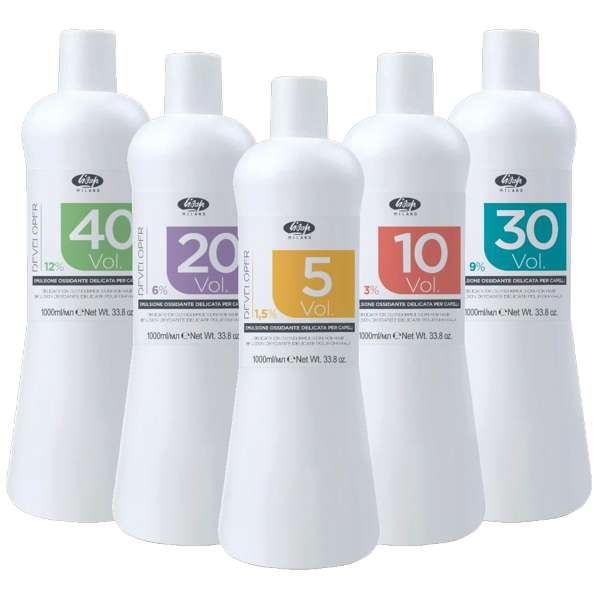
As a quick reference, 10 vol is 3% peroxide, 20 vol is 6%, 30 vol is 9% and 40 vol is 12%. But choosing between them takes a little more thought than simply matching each number to a number of levels of lift.
10, 20, 30 or 40 Vol: The Quick Answer
|
Developer |
Usually chosen when… |
| 10 Vol / 3% | The priority is deposit, going darker, refreshing colour or very limited lift |
| 20 Vol / 6% | Permanent colour needs moderate lift or the colour system specifies it for white/grey coverage |
| 30 Vol / 9% | More lift is required on natural hair and the chosen colour system permits it |
| 40 Vol / 12% | A high-lift colour or professional lightener specifically calls for it |
The important words here are “usually” and “specifically calls for it.”
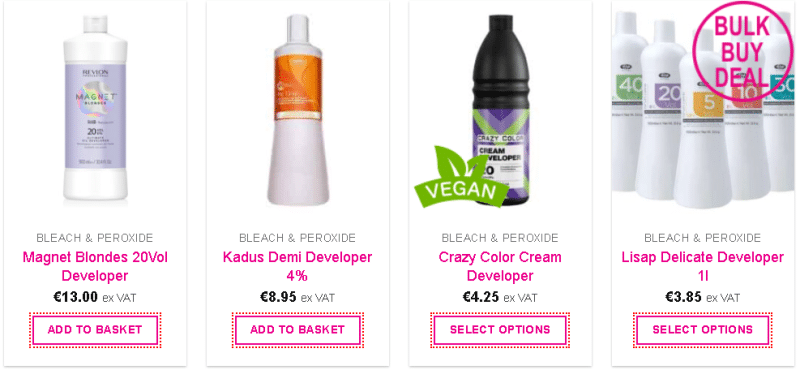
You can browse THAB’s professional Peroxide & Developers range, but choose the developer after choosing the colour system—not the other way around.
Developer Isn’t a Simple Lift Dial
You will often see charts saying 20 vol lifts two levels, 30 vol lifts three and 40 vol lifts four.
They are useful as a rough guide for permanent colour. They are not a universal law.
A developer activates the product it is mixed with. Permanent tint and professional lightener do very different jobs, even when both are mixed with 20 vol.
That is why asking “How many levels will 20 vol lift?” without mentioning the product is a little like asking how fast an engine will make something travel without saying what vehicle the engine is in.
For example, L’Oréal Majirel uses 20 vol for up to around two levels of lift on natural hair. A professional bleach mixed with 20 vol can have considerably more lightening potential because the lightener itself is formulated to remove pigment much more aggressively.
So when choosing developer, start with the service:
Are you depositing colour, lifting natural pigment, covering white hair or actually removing pigment with bleach?
That question is more useful than starting with the peroxide bottle.
When 10 Vol Makes Sense
10 volume contains 3% hydrogen peroxide. Within many permanent colour systems, it is used when heavy lifting is not required.
Think going darker, colouring close to the existing level, adding depth or working with a formula where deposit matters more than lift.
What it should not become is a universal replacement for every toner or demi-permanent colour.
Many demi colours have their own activator. THAB stocks products such as Wella Color Touch Activating Emulsion, which exists because Color Touch has its own development system.
In other words, “low peroxide” and “correct developer” are not always the same thing.
Why 20 Vol Is So Common
20 volume, or 6%, sits in a useful middle ground. It can provide lift while still allowing strong colour deposit, which is why it appears across so many permanent colour services.
It is also frequently associated with grey coverage.
There is some truth in that, but “grey hair = 20 vol” is too simplistic. Grey coverage is created by the whole formula: the colour range, shade selection, developer, percentage of white hair, saturation and processing time.
With L’Oréal Majirel, for example, 20 vol forms part of the brand’s white-hair coverage system. Our full guide to using L’Oréal Majirel, including mixing ratio and developer choice explains that formula in more detail.
Other professional ranges can give different instructions. Always formulate within the system in front of you rather than applying one developer rule to every tube in the colour cupboard.
When 30 Vol Is Useful—and When It Won’t Solve the Problem
30 volume contains 9% peroxide and is commonly used when permanent colour needs greater lift from a natural base.
The phrase natural base matters.
Imagine the client has natural level-five regrowth but the lengths have repeatedly been coloured level four. Applying a lighter permanent shade with 30 vol may lift the untouched roots and reveal plenty of underlying warmth, while the colour-built-up lengths barely move.
The result? Warm, lighter roots sitting above darker ends.
Reaching for 40 vol next time is not the clever fix.
The problem is colour history. Permanent colour is far better at lifting natural pigment than cutting through layers of old permanent colour.
This is the reason colourists ask what has been on the hair before. The answer can matter more than the developer number.
Why Do Roots Sometimes Turn Lighter or More Orange?
“Hot roots” are not just an internet hair-colour myth.
Fresh regrowth behaves differently from older lengths. It is natural, usually healthier and sits beside the warmth of the scalp. If too much lifting power is used through that area, the roots can lift further and expose more orange, red or gold than the rest of the hair.
The wrong solution is often to use the same strong formula everywhere.
A professional colour correction may require separate thinking for the regrowth and the previously coloured lengths rather than one bowl dragged from scalp to ends.
That is also why repeatedly pulling permanent colour through the full length at every appointment can cause problems. Porous ends may accumulate pigment and become progressively darker while the roots continue behaving differently.
What Is 40 Vol Developer Actually For?
40 volume is 12% peroxide and has a legitimate place in professional colouring. It is commonly associated with certain high-lift colour formulas and lightening services.
It is not simply “20 vol, but better.”
If a colour range specifies 30 vol for a particular shade, replacing it with 40 vol does not automatically give you a better version of that result. You are changing the chemistry the manufacturer designed the formula around.
Application also matters. Some professional lighteners permit higher developer strengths for off-scalp work but restrict the strength where the product comes into contact with the scalp.
So “Can I use 40 vol with bleach?” does not have a useful yes-or-no answer without knowing which bleach and where it is being used.
THAB’s Bleach & Peroxide range includes systems from professional colour brands; the instructions for the specific lightener should always take priority over a generic developer chart.
Can You Swap One Brand’s 20 Vol for Another?
They may both contain roughly 6% hydrogen peroxide, but that does not necessarily make them identical parts of a colour formula.
Professional developers can differ in consistency, stabilisation and the system they were designed to work with. Some colour ranges explicitly require their matching oxidant.
You can see this within Wella alone: Welloxon Perfect Developer and Color Touch Activating Emulsion are both oxidising products, but they belong to different colour systems.
The safest habit behind the chair is simple: check the technical instructions for the colour or lightener rather than choosing a developer solely because the percentage looks familiar.
What Happens If You Use the Wrong Developer?
Sometimes nothing dramatic happens. The result is simply not the result you planned.
Too little lifting power can leave a permanent colour deeper or warmer than expected. Too much can expose more underlying warmth, particularly at the regrowth. An inappropriate developer on previously processed lengths can add unnecessary oxidation without fixing old colour build-up. And changing the prescribed developer or mixing ratio can affect how the colour system deposits and develops.
That is why a colour formula should really be written as four pieces of information:
starting hair + target shade + colour formula + developer
Leaving out the first two and asking “Should I use 20 or 30 vol?” is usually where the trouble starts.
So, Which Developer Should You Choose?
If you are going darker or mainly depositing, a lower-volume developer may be appropriate. For many permanent colour and grey-coverage formulas, 20 vol is common. When more lift is needed from natural hair, the system may move to 30 vol. And 40 vol belongs where a high-lift colour or lightener specifically requires it.
But don’t let the numbers become the formula.
Check whether the hair is natural or previously coloured. Look at the amount of lift actually required. Consider the condition of the mids and ends. Check whether the service is on- or off-scalp. Then follow the developer and mixing ratio specified for the colour range.
For salons carrying several peroxide strengths, our guide to developer bottle sizes and reducing salon peroxide waste is also worth reading.
The best developer is rarely the strongest bottle you can use. It is the one that gives the colour formula exactly as much oxidation as it needs—and no more.
