

Barber, Electrical, Hair, Tips & Advice
How to Choose Professional Hair Clippers: A Barber’s Buying Guide
Sep
Professional hair clippers are one of the most important investments in a barber’s toolkit. The right model should cut consistently, feel comfortable in the hand and withstand regular use throughout a busy working day.
While motor speed and battery runtime are important, they are not the only features worth comparing. Blade type, taper adjustment, guard availability, charging options, maintenance requirements and access to replacement parts can all affect how useful a clipper is in practice.
This guide explains how to compare professional hair clippers and choose a dependable model for your barbershop or salon.
Start With the Services You Provide
Before comparing individual models, consider the services you perform most frequently.
A barber completing skin fades throughout the day may prioritise precise blade adjustment, a responsive taper lever and cordless mobility. Someone who mainly removes bulk before scissor work may need a clipper with strong, consistent torque and a comfortable body for longer cutting sessions.
Think about:
- The cuts you perform most often
- The hair lengths and textures you regularly work with
- Whether you specialise in fades or general cutting
- How many clients you see during a typical day
- Whether you need to move freely between chairs
- How often you can recharge equipment
Defining these requirements will make it easier to separate useful features from specifications that may not improve your everyday work.
Clippers vs Trimmers: What Is the Difference?
Clippers and trimmers perform different roles. Most professional barbers need both rather than expecting one tool to manage every stage of a haircut.
| Tool | Best used for | Typical features |
| Clipper | Bulk removal, tapering, fading and general cutting | Wider blade, attachment guards and an adjustable lever on many models |
| Trimmer | Outlining, beard shaping, detail work and close finishing | Narrow blade, compact body and greater precision around edges |
| Foil shaver | Creating an especially close finish after the hair has been shortened | Foil head designed for very short stubble rather than bulk removal |
A clipper forms the foundation of the haircut, while a trimmer helps refine outlines and smaller areas. A foil shaver can then be used where an especially close finish is required.
Should You Choose Corded or Cordless Hair Clippers?
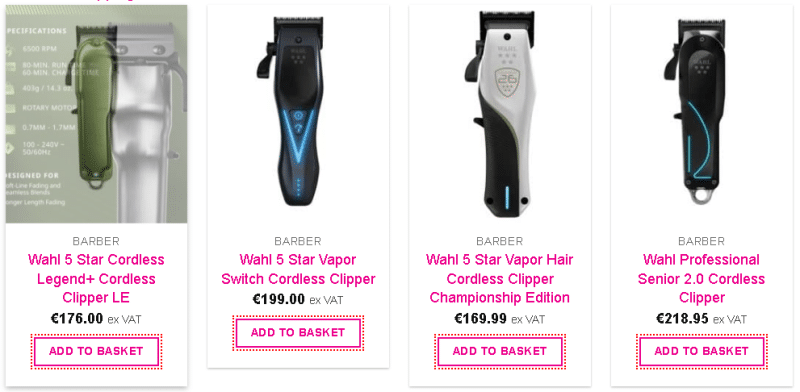
Cordless hair clippers are popular because they give the barber more freedom around the chair. They also reduce cable clutter and make it easier to change position while working.
When comparing cordless models, check:
- Stated battery runtime
- Charging time
- Battery-level indicator
- Charging-stand compatibility
- Whether the clipper works while connected to power
- Availability of replacement batteries
- Battery warranty terms
Do not assess runtime in isolation. A long runtime is less useful if the clipper takes several hours to recharge and cannot be operated while plugged in.
Corded clippers provide continuous power and can be dependable options for long working periods. However, their cables need to be positioned carefully to avoid restricting movement or creating a trip hazard.
Many professionals use a cordless clipper as their primary tool and keep a corded or fully charged model available as a backup.
Understand Clipper Motor Performance
Manufacturers may describe clipper motors as magnetic, pivot, rotary or brushless. These terms can be helpful, but the most important consideration is how the clipper performs under load.
Dense, coarse or damp hair requires steady torque. A suitable professional clipper should continue cutting smoothly without slowing down, snagging or requiring repeated passes.
Strokes per minute can indicate blade speed, but a higher number does not automatically mean better cutting performance. Motor efficiency, torque, blade quality and overall construction all influence how the clipper behaves during a service.
When choosing professional hair clippers, look beyond the headline speed and consider whether the model is designed for your expected workload and the hair types you regularly encounter.
Choose the Right Blade System
The blade affects cutting length, control and the type of finish you can achieve. Compare the following features:
- Minimum and maximum cutting lengths
- Blade width
- Taper-lever range
- Fixed or detachable blade design
- Replacement blade availability
- Blade material and coating
- Manufacturer cleaning and oiling instructions
Fade-focused work usually benefits from fine adjustment and a smooth taper lever. Detachable-blade systems can be useful for quickly changing between different cutting lengths.
Some barbers choose to zero-gap their clippers or trimmers for a closer result. This should only be done when permitted by the manufacturer. The moving blade must not extend beyond the stationary blade, as an incorrectly adjusted tool may scratch or cut the skin.
Check the Guards and Included Accessories
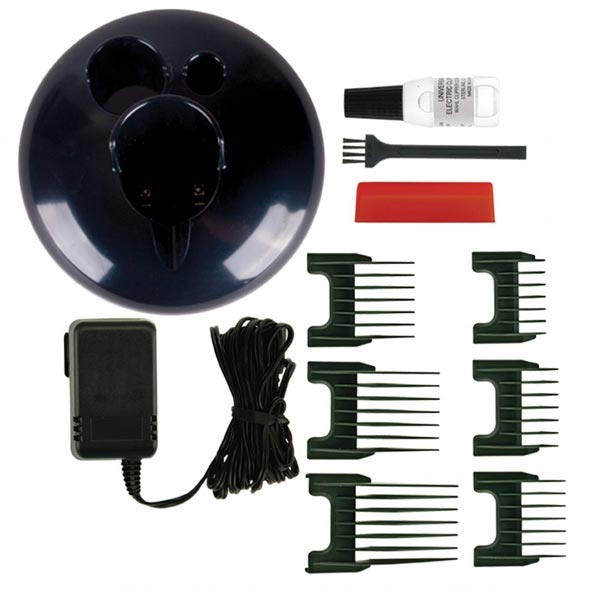
Attachment guards determine the cutting lengths available and should fit firmly without excessive movement.
Before buying, confirm that the kit includes the guard sizes you use most frequently. Also check whether replacement guards can be purchased individually if one becomes damaged or misplaced.
Useful accessories may include:
- Secure attachment guards
- Blade oil
- Cleaning brush
- Blade cover
- Charging stand
- Storage case
- Spare battery
- Additional blade options
Guard availability can be particularly important when comparing hair clippers. A professional tool is easier to maintain when compatible guards, blades and accessories can be sourced without long delays.
Consider Comfort and Ergonomics
A clipper may appear lightweight on a product page but still feel tiring after repeated use. Weight distribution, grip size, vibration and switch placement all affect comfort.
Consider:
- Overall weight and balance
- Body shape and grip diameter
- Surface texture
- Vibration levels
- Switch and lever position
- Heat produced during extended use
- Ease of changing guards with one hand
The best barber clippers should allow you to maintain a relaxed grip and neutral wrist position. If possible, handle the clipper before purchasing several units for a barbershop team.
Compare Noise, Heat, and Vibration
Noise can influence the client experience, especially when working around the ears or providing children’s haircuts. Excessive vibration may also contribute to hand fatigue during a long shift.
Professional clippers naturally produce some sound and warmth, but a tool that becomes unusually hot, loud or unstable should be removed from service and inspected.
Product reviews can provide helpful information about real-world noise and heat, although performance may vary depending on blade condition and maintenance.
Look at Cleaning and Maintenance Requirements
Regular care helps professional barber equipment perform consistently and may extend its working life.
After each client:
- Switch off or disconnect the clipper.
- Remove loose hair with a suitable cleaning brush.
- Clean and disinfect the tool according to its instructions.
- Apply clipper oil at the points recommended by the manufacturer.
- Wipe away excess oil before the next service.
Keep air vents clear and inspect the blade, cable, plug and housing regularly. Do not immerse an electrical clipper unless the manufacturer specifically states that the relevant parts are washable.
A damaged, unusually noisy or overheating clipper should not remain in use until it has been checked.
Think About Replacement Parts and Support
A professional clipper is a working tool, so ongoing support matters almost as much as its initial performance.
Before purchasing, check whether you can obtain:
- Replacement blades
- Attachment guards
- Charging cables and stands
- Batteries
- Blade screws and small components
- Warranty support
- Authorised servicing
A lower-priced clipper may become expensive if basic replacement parts are difficult to obtain. Compare the total cost of ownership rather than looking only at the purchase price.
What Should the Barber Check Before Buying?
- Its suitability for a 230 V electrical supply
- Whether an adapter is included or required
- Commercial-use warranty conditions
- Availability of replacement parts
- Expected delivery times for blades and guards
- Access to authorised repairs or servicing
- Whether the tool can manage your normal daily workload
Buying through an established professional supplier can make it easier to find compatible accessories and obtain product support.
Professional Hair Clipper Buying Checklist
Before making your final choice, ask:
- Is the clipper suitable for my most common services?
- Can it cut efficiently through the hair textures I work with?
- Does the blade provide the adjustment I need?
- Are my preferred guard sizes included?
- Is the tool comfortable enough for repeated daily use?
- Will the battery cover my normal working pattern?
- Can it operate while connected to power?
- Are replacement blades and guards readily available?
- Does the warranty cover professional use?
- Do I have another clipper available if it needs charging or repair?
The most suitable model is not necessarily the one with the longest feature list. It is the clipper that fits your services, technique and working environment.
Build a Dependable Barbering System
Choosing professional hair clippers should be approached as part of building a complete working system. Your setup may include a primary clipper, detail trimmer, foil shaver, guards, charging equipment, cleaning products and a dependable backup tool.
A well-planned kit helps you move smoothly between services and reduces the risk of delays when equipment needs charging or maintenance. Choose tools that suit your technique, can be maintained easily and are supported by readily available replacement parts.
Frequently Asked Questions
Which professional hair clippers are best for fades?
Look for consistent cutting power, a smooth taper lever and a blade with a useful adjustment range. Secure guards and readily available replacement blades are also important. The best choice depends on how close you work and the fading technique you use.
Are cordless clippers suitable for professional use?
Yes. Many cordless hair clippers are designed for regular professional use. Compare runtime, charging time and whether the clipper can continue operating while plugged in. Keep a charged or corded backup available during busy periods.
Can I use a trimmer instead of a clipper?
A trimmer is intended for outlining, beard edges and close detail work. It is generally not the best tool for removing large amounts of hair. Regular bulk cutting with a trimmer may be slower and place unnecessary strain on the tool.
How often should clipper blades be oiled?
Follow the manufacturer’s instructions for the specific model. Under busy professional use, blades usually require frequent, light oiling after loose hair has been removed. Avoid applying excessive oil.
How long should a cordless clipper battery last?
The battery should comfortably cover your usual working pattern between charges. Consider both runtime and recharge time rather than choosing a model based on runtime alone.
Do more powerful clippers always cut better?
Not necessarily. Effective cutting depends on the motor, torque, blade design, blade condition and maintenance. A high speed figure alone does not guarantee that a clipper will perform well through dense hair.
