

Barber, Beauty, Hair, Hairdresser, Tips & Advice
Taper Blade vs Fade Blade: Which Clipper Blade Should You Choose?
Oct
When comparing professional clippers, the motor and battery often get most of the attention. The fitted blade deserves a closer look too, particularly if your day moves between short back and sides, longer scissor cuts and close fades. Understanding taper blade vs fade blade differences can help you choose a machine that suits your barbering work, or buy a compatible replacement without changing a clipper you already like using.
What is the difference between a taper blade and a fade blade?
A conventional taper blade has a more curved profile that supports general cutting and scooping movements. A conventional fade blade has a thinner, flatter profile suited to close work. Both can be used for blending, and neither guarantees a particular haircut. The exact blade design, clipper adjustment and barber’s technique determine the result.
Choose a taper blade when your priority is a versatile tool for everyday cutting. Consider a fade blade when close, controlled work is a large part of your service menu. Check the complete clipper specification before deciding from the blade name alone.
What does a taper blade do well?
A taper blade is useful when moving between cutting lengths, removing hair with guards and handling a varied appointment book. The curved profile supports a scooping action as the clipper moves away from the head.
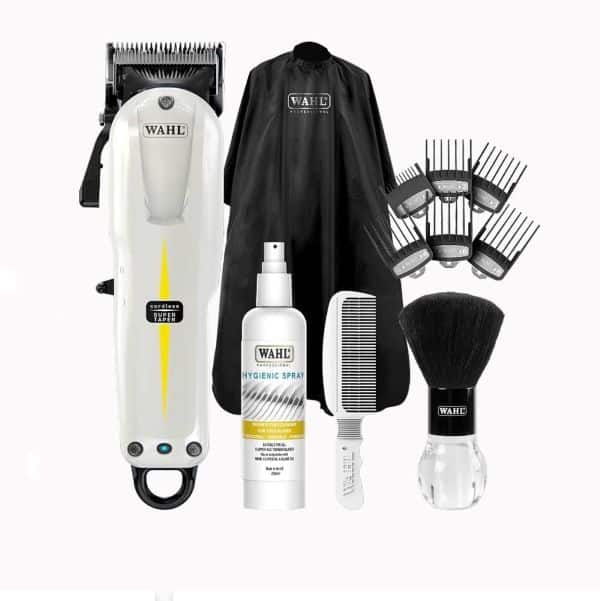
For a versatile corded option, compare the Wahl Professional Super Taper Clipper Corded. Wahl describes the Super Taper as suitable for bulk removal, tapering and general use, with an adjustable lever for blending lengths.
That does not restrict it to traditional tapers. It means the blade and lever offer a versatile starting point, particularly where a barber prefers using guards and controlled movements to manage transitions.

When might a fade blade be the better choice?
A fade blade can suit a barber who regularly works close to the head and wants a flatter blade profile. The Wahl Professional Cordless Senior Clipper has a precision fade blade described as adjustable, thin in profile and flat underneath for closer cutting.
For replacement parts, compare the specification on the Wahl Clipper Blades listing with the part number fitted to your machine. A blade marketed for fading may still be wrong for your clipper.
Do not assume every fade blade has the same cutting range. Newer blade systems can use different tooth designs, lever travel and mounting arrangements.
Taper blade vs fade blade comparison
| Consideration | Conventional taper blade | Conventional fade blade |
| Profile | More curved | Thinner and flatter |
| Common priority | General cutting and versatile blending | Controlled close work |
| Typical movement | Supports scooping away from the head | Suits deliberate work close to the surface |
| Can it create a fade? | Yes, with appropriate technique | Yes, with appropriate technique |
| Compatibility | Must match the exact clipper | Must match the exact clipper |
These are broad distinctions, not universal measurements. Compare the manufacturer’s specifications for the two products you are actually considering.
Can you swap a taper blade for a fade blade?
Only where the manufacturer confirms compatibility with the exact clipper model and version. A familiar brand name or similar-looking screw spacing is not sufficient.
Check the model number, replacement blade reference, mounting hardware and any fitting instructions. Confirm whether the replacement includes the stationary blade, moving cutter or both. Wahl’s fading blade page includes compatible models, demonstrating why the part reference matters.
Before buying a complete machine, read our professional hair clipper buying guide. It covers the wider decision, including adjustment, guards and the practical demands of salon work.
Does a fade blade replace a trimmer or foil shaver?
No. A clipper blade, detail trimmer and foil shaver perform different jobs. A close-cutting clipper does not automatically give the finish of a foil shaver or the outlining control of a dedicated trimmer.
Plan the kit around the sequence of your services. The clipper may establish and blend lengths, while other tools handle outlines or finishing where appropriate. Avoid purchasing a blade on the expectation that it will replace every other tool on the station.
What should you check before replacing a blade?
If the clipper pulls or cuts unevenly, first follow the manufacturer’s cleaning, lubrication and alignment instructions. Inspect for damaged teeth and stop using a damaged blade. Check temperature during work and allow equipment to cool where necessary.
If adjustment is permitted, the moving cutter must not project beyond the stationary blade. Zero-gap adjustment requires particular care; it is not a compulsory setting for professional fades.
Frequently asked questions
Q. Can you do a skin fade with a taper blade?
A taper blade can form part of a skin-fade service. The finished result also depends on technique and any trimmer or shaver used for the shortest areas.
Q. Are fade blades better for beginners?
There is no universal answer. Start with the tool specified by your training provider and learn its adjustment and safe handling before experimenting with another blade.
Q. Does a taper lever mean the clipper has a taper blade?
No. A clipper with a fade blade can also have an adjustable lever. Check the fitted blade specification rather than relying on the lever’s name.
